Power is the part of a workspace fit-out that gets planned last and causes the most daily irritation. A desk with no power route means an extension lead on the floor, which is a trip hazard, and cables draped over the back edge, which stops the desk sitting against the wall.
Count the outlets you actually need
A single modern workstation typically needs more sockets than people expect:
- Monitor (one per screen)
- Laptop charger or desktop tower
- Desk lamp
- Phone or headset charger
- Dock or hub
That is five before anything unusual. A two-socket solution means an adapter within a week.
Recessed desktop modules
A unit that drops into a cut-out in the desk surface, flush or pop-up, carrying two or three mains sockets and usually USB.
Advantages: power arrives at the surface where devices are, nothing hangs over the edge, and on a meeting table it removes the extension lead entirely. Considerations: it needs a cut-out, which means either a desk supplied with one or cutting your own — a permanent change to the surface.
Check the cut-out shape
Round modules need a hole saw of a specific diameter; rectangular ones need a router or jigsaw and a steady hand. If you are retrofitting, match the module to the tools you have. A round module in a 60 or 80 mm cut-out is the most forgiving retrofit.
USB-C and what the wattage means
A USB-C port on a desk module is only as useful as its power delivery rating.
- Up to 18 W: phones and small accessories. Will not meaningfully charge a laptop.
- 30–45 W: charges a small laptop slowly, holds a larger one steady while in use.
- 60–100 W: genuine laptop charging.
If the listing gives no wattage, assume it is at the low end. A port that charges your phone but not your laptop is still useful — it just does not replace the charger.
Grommets and cable trays
If a recessed module is too much, a simple grommet hole plus an under-desk tray does most of the job. The grommet gets cables through the surface tidily; the tray holds the power strip off the floor so it can be cleaned around and does not sit in a puddle if anything is spilled.
A tray also means the desk can be moved without unplugging everything, which matters more than it sounds in a room that gets reconfigured.
Conference and shared tables
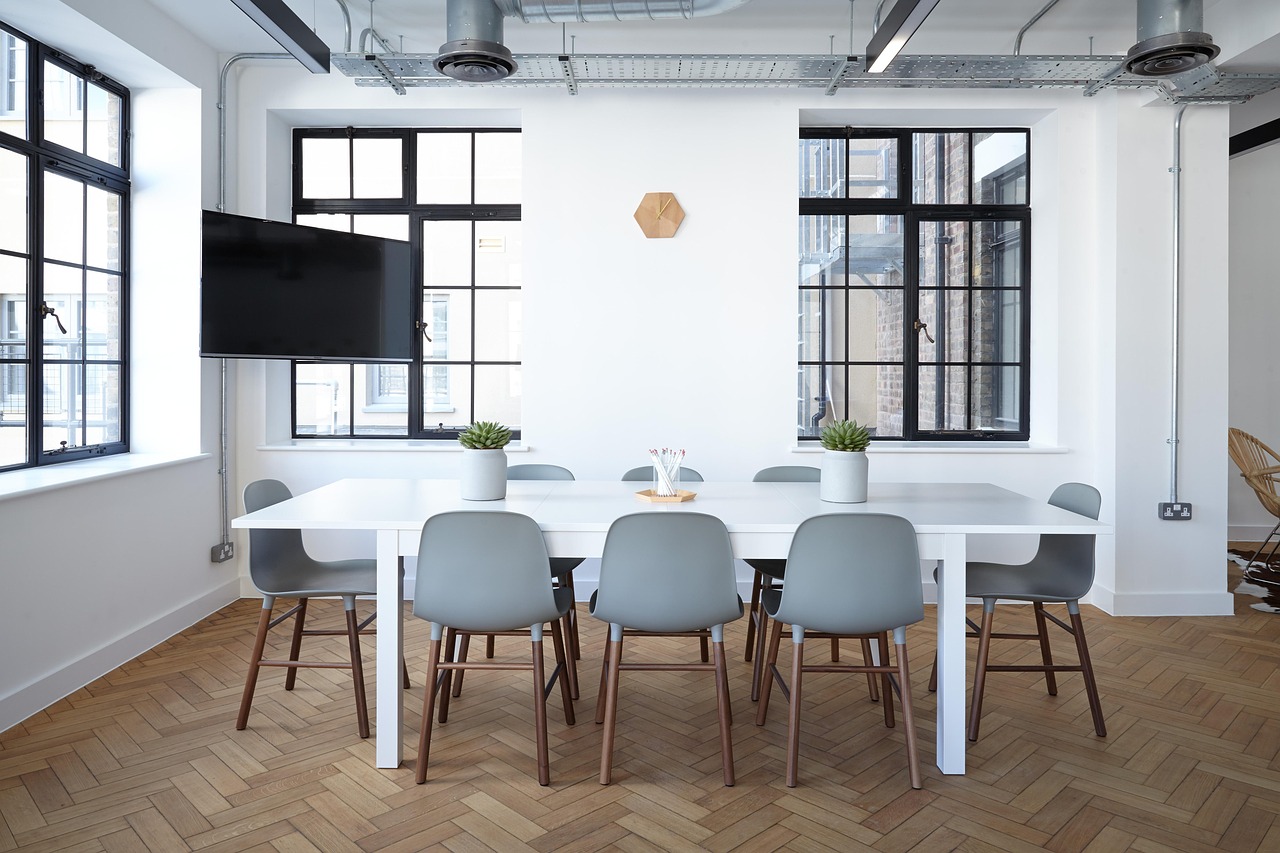
The requirement is different: fewer devices per person but more people, and a strong need for nothing to cross the floor. A multi-port hub in the centre of the table with a floor feed through a leg or a floor box is the standard answer.
Where video conferencing is involved, an HDMI passthrough in the same module saves a cable being passed around the table every meeting. It is a small feature that changes how a room is used.
Safety points
- Do not daisy-chain extension leads. One lead from a wall socket to one strip is the limit.
- Check the module’s total rating against what you plug into it. A desk module rated for 10 A will not run a heater as well as a workstation.
- Anything hard-wired should be installed by a qualified electrician. Plug-in modules are user-fit; wired ones are not.
- Route cables so nothing is pinched by a height-adjustable desk as it moves. This is the most common cause of damaged cables on sit-stand desks.
Planning order
Decide where the desk goes, find the nearest wall socket, then choose the power solution — not the other way round. A recessed module is no help if the feed cable cannot reach a socket without crossing a walkway.
Our Desk Power & Accessories range covers recessed outlets, USB-C modules and conference hubs, with cut-out sizes and ratings on each listing.